|
Specification |
|
Fixed port |
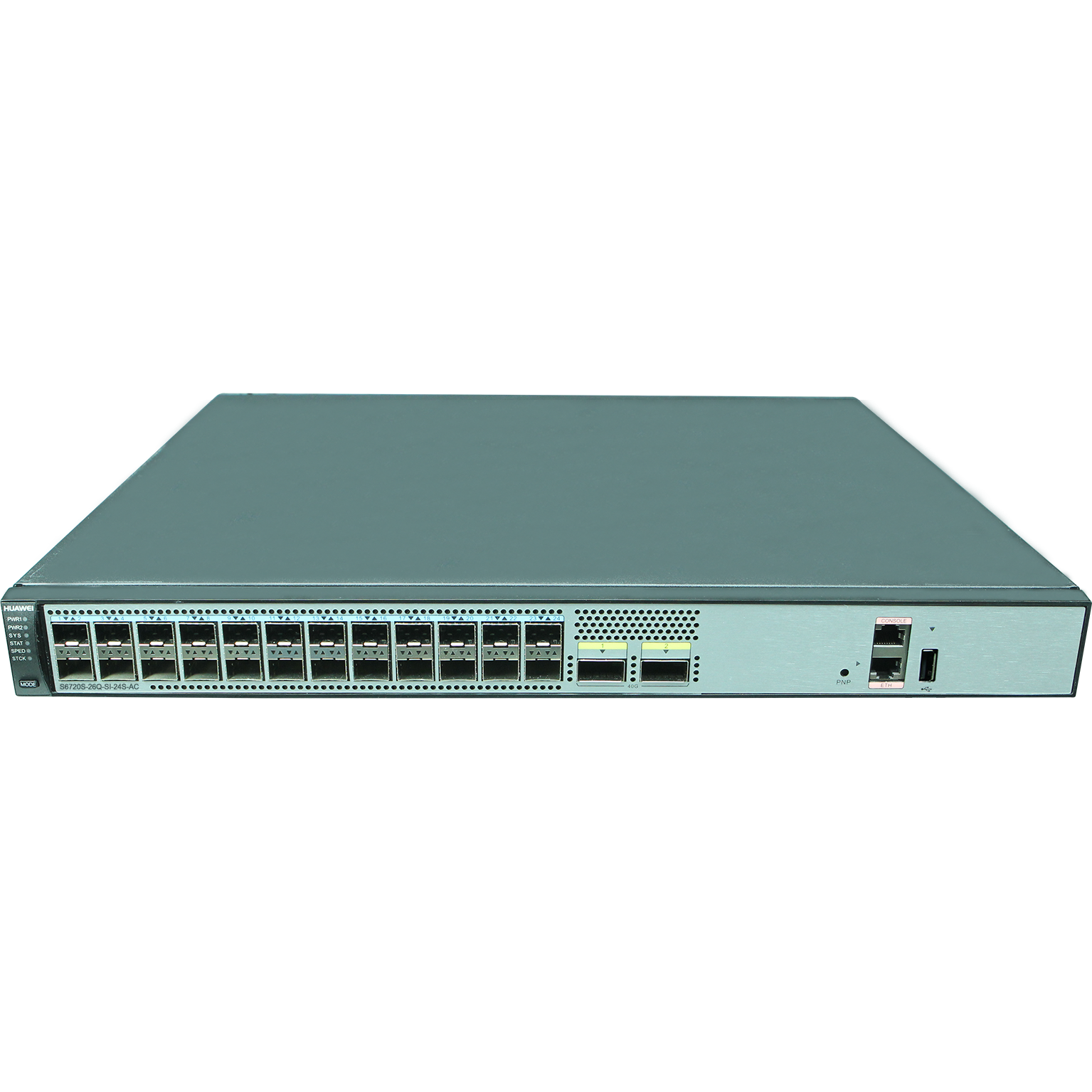
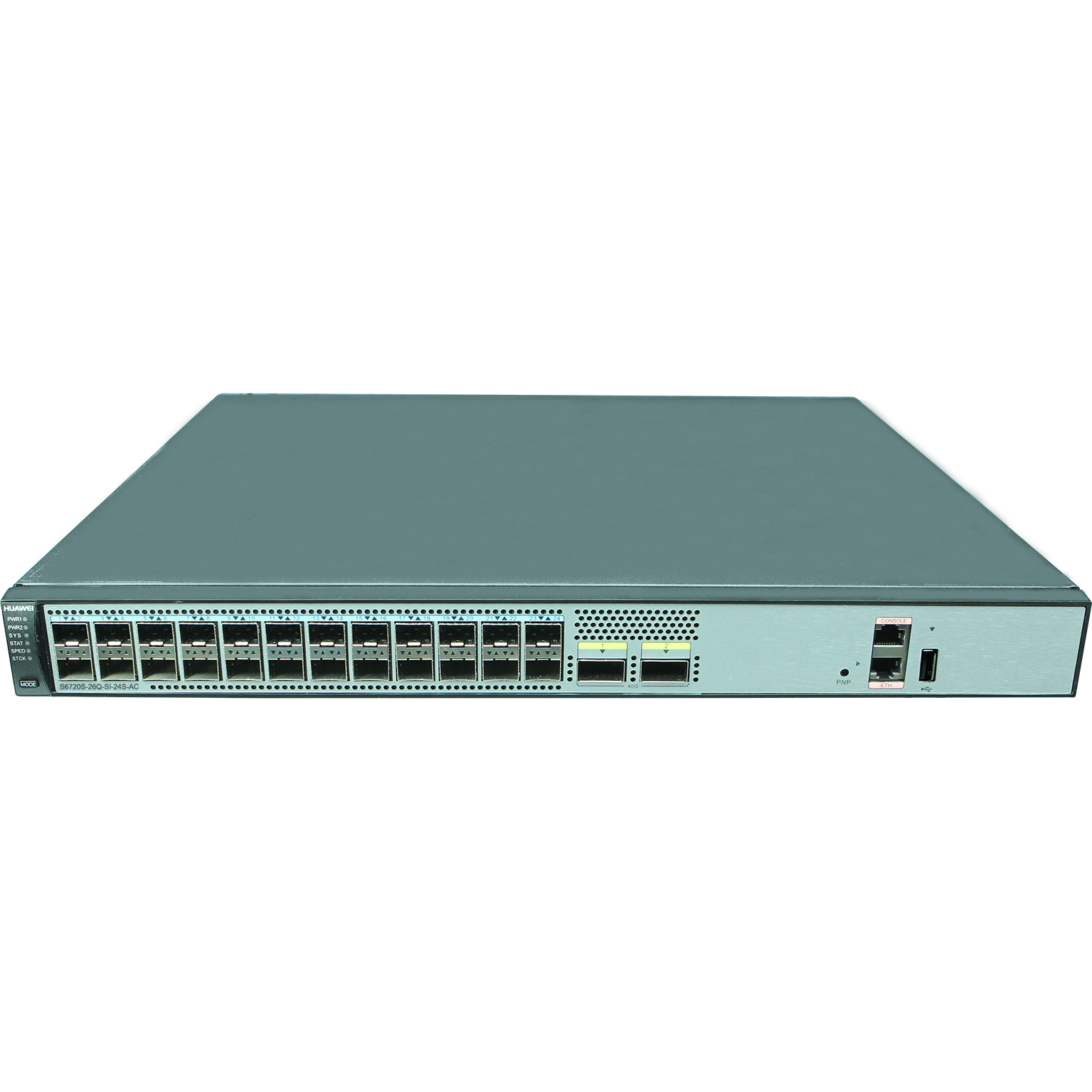
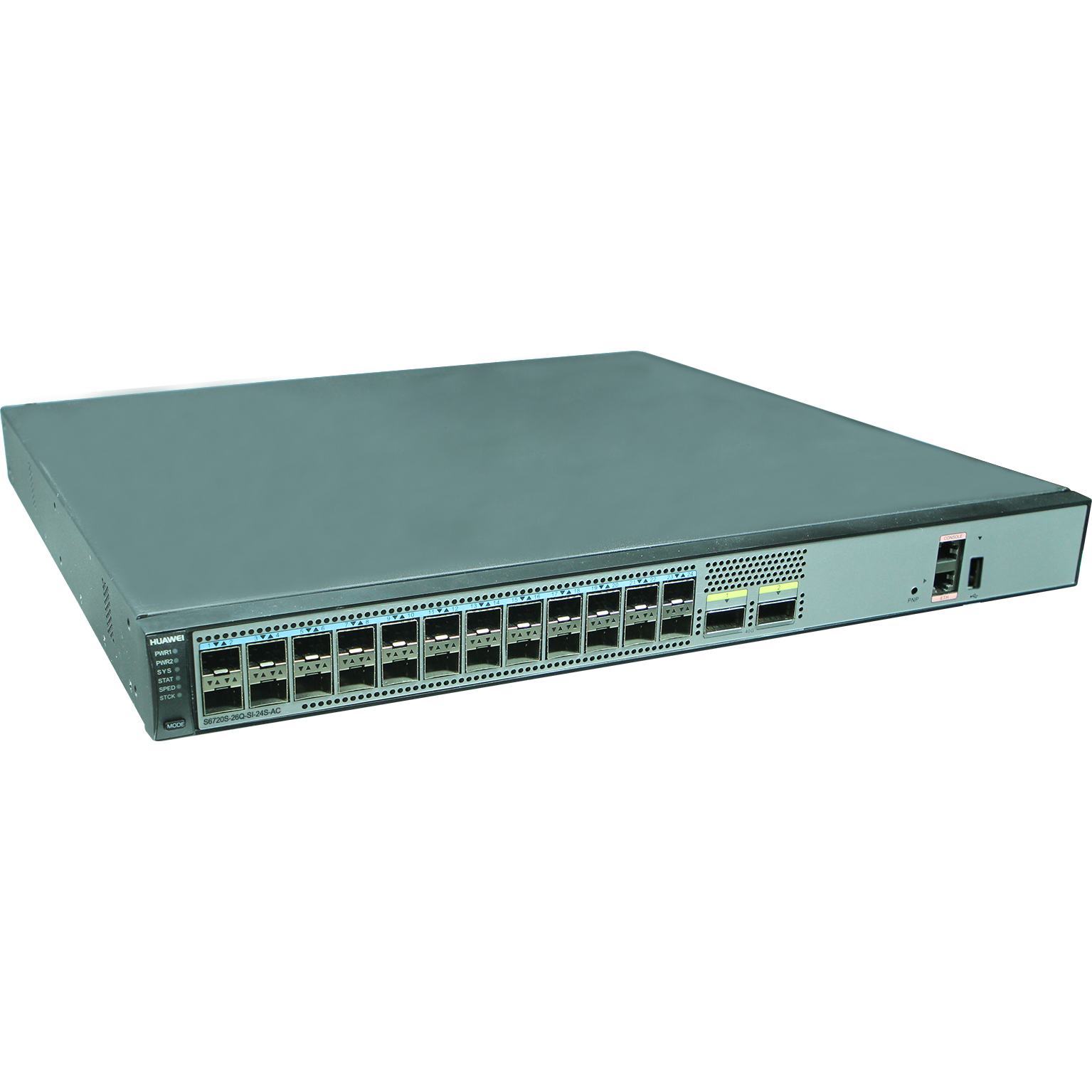
24x10GE SFP+, 2x40GE QSFP+ ports |
|
Forwarding performance |
240 Mpps |
|
Extended slot |
Not supported |
|
MAC address table |
32K |
|
MAC address learning and aging |
|
Static, dynamic, and blackhole MAC address entries |
|
Packet filtering based on source MAC addresses |
|
VLAN features |
4K VLANs |
|
Guest VLAN and voice VLAN |
|
VLAN assignment based on MAC addresses, protocols, IP subnets, policies, and ports |
|
VLAN Mapping, Super VLAN |
|
Basic QinQ and selective QinQ |
|
IPv4 routing |
Static routing, RIPv1, RIPv2, ECMP, URPF, OSPF, IS-IS, and BGP |
|
VRRP |
|
Policy-based routing |
|
Routing policies |
|
IPv6 routing |
Static routing |
|
RIPng |
|
OSPFv3, BGP4+, ISISv6 |
|
IPv6 features |
Neighbor Discovery (ND) and ND snooping |
|
IPv6 Ping |
|
VRRP6 |
|
DHCPv6 snooping, DHCPv6 server, and DHCPv6 relay |
|
MLDv1 and MLDv2 |
|
PIM-DM for IPv6, PIM-SM for IPv6 |
|
6 Over 4 tunnels |
|
Multicast |
IGMPv1/v2/v3 snooping |
|
Fast leave |
|
IGMP snooping proxy |
|
MLD snooping |
|
Port-based multicast traffic suppression |
|
Inter-VLAN multicast replication |
|
Controllable multicast |
|
IGMP v1/v2/v3 |
|
PIM-SM and PIM-DM |
|
Multicast Source Discovery Protocol (MSDP) |
|
Multicast routing policies |
|
QoS/ACL |
Traffic classification based on ACLs |
|
Traffic classification based on outer 802.1p fields, inner VLAN IDs, outer VLAN IDs, source
MAC addresses, and Ethernet types
|
|
Access control after traffic classification |
|
Traffic policing based on traffic classifiers |
|
Re-marking based on traffic classifiers |
|
Class-based packet queuing |
|
Associating traffic classifiers with traffic behaviors |
|
Rate limiting on inbound and outbound ports |
|
Traffic shaping based on ports and queues |
|
Tail drop |
|
Priority Queuing (PQ) |
|
Deficit Round Robin (DRR) |
|
PQ + DRR scheduling |
|
Weighted Round Robin (WRR) |
|
PQ + WRR scheduling |
|
Reliability |
STP (IEEE 802.1d), RSTP (IEEE 802.1w), and MSTP (IEEE 802.1s) |
|
BPDU protection, root protection, and loop protection |
|
RRPP ring topology and RRPP multi-instance |
Smart Link tree topology and Smart Link multi-instance, providing millisecond-level
protection switchover |
|
Smart Ethernet Protection (SEP) |
|
G.8032 Ethernet Ring Protection Switching (ERPS) |
|
BFD for OSPF, IS-IS, VRRP, and PIM protocols |
|
Enhanced trunk (E-trunk) |
|
Security features
|
Defense against DoS, ARP, and ICMP attacks |
|
Binding of the IP address, MAC address, port number, and VLAN ID of a user |
|
Port isolation, port security, and sticky MAC |
|
MAC-Forced Forwarding (MACFF) |
|
Limit on the number of learned MAC addresses |
|
IEEE 802.1X authentication, MAC address authentication, Portal authentication, and hybrid
authenticatio
|
|
Authentication methods, including AAA, RADIUS, and HWTACACS |
|
CPU defense |
|
Super Virtual Fabric (SVF) |
SVF Parent and Client |
Management and
maintenance |
iStack (using service ports as stack ports) |
|
Virtual Cable Test (VCT) |
|
Ethernet OAM (IEEE 802.3ah and IEEE 802.1ag) |
|
SNMPv1/v2/v3 |
|
RMON |
|
Web-based network management system and relevant features |
|
System logs and multi-level alarms |
|
GVRP |
|
MUX VLAN |
|
sFlow |
|
Hypertext Transfer Protocol Secure (HTTPS) |
|
SSH1.5/SSH2 |
|
Operating environment |
Working temperature: 0–1800 m, 0–45°C; 1800–5000 m, the highest operating temperature
reduces by 1°C every time the altitude increases by 220 m.
Relative humidity: 5%–95% (noncondensing
|
|
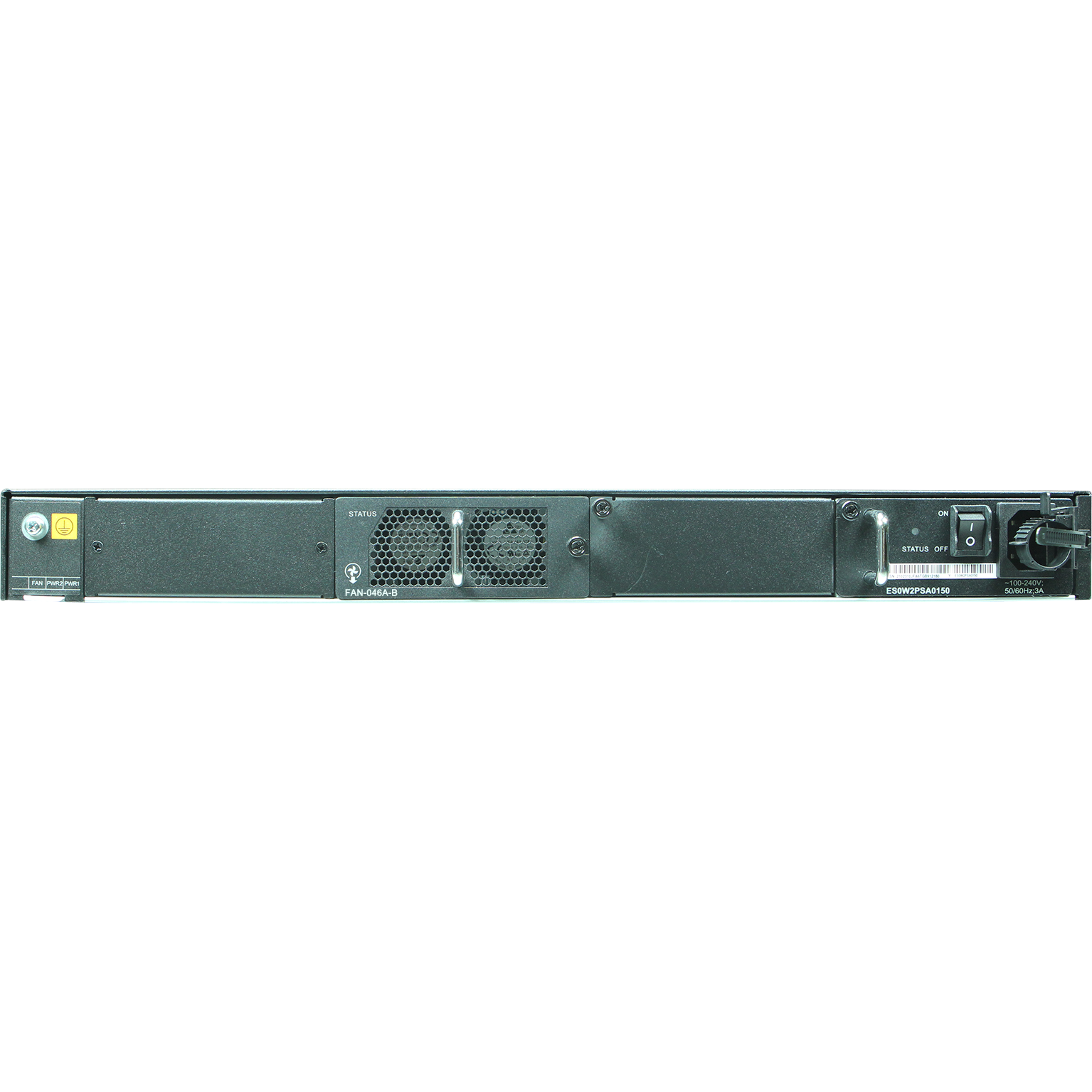
Input AC voltage |
AC:
Rated voltage range: 100 V to 240 V A C, 50/60 Hz
Maximum voltage range: 90 V to 264 V A C, 47/63Hz
|
|
Dimensions |
442 (W)×420 (W)×44.4 (H) |
|
Typical power consumption |
68.4W |